

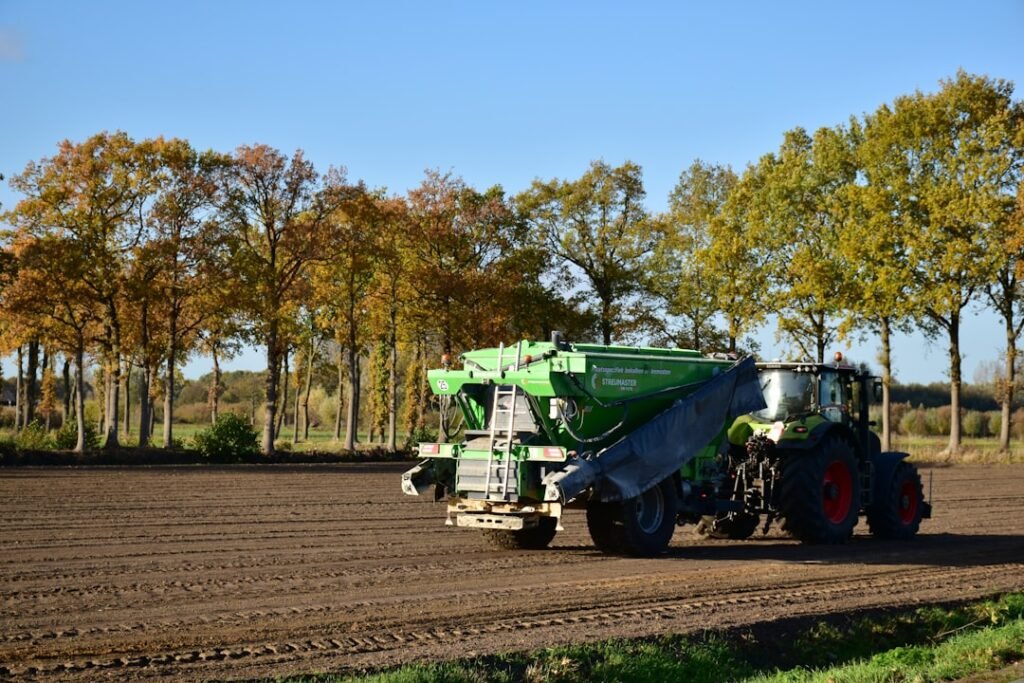
America’s domestic fertilizer supply chain stands at a turning point this week, as the federal government launches the most aggressive fertilizer investment drive in modern history. On July 1, 2026, U.S. Secretary of Agriculture Brooke Rollins announced the $500 million Fertilizer Investment & Expansion for Long-Term Domestic Supply — known as the FIELDS Program. The initiative targets the construction and expansion of fertilizer manufacturing plants across the United States. Farmers, commodity groups, and rural lawmakers responded swiftly and loudly.
Background on America’s Domestic Fertilizer Supply Chain
Furthermore, the fertilizer crisis did not arrive without warning. For decades, American producers relied heavily on foreign suppliers for critical crop nutrients. Global supply chains absorbed severe shocks from geopolitical conflicts, including disruptions tied to the Iran conflict’s closure of the Strait of Hormuz. Meanwhile, countervailing duties imposed in 2021 on Moroccan and Russian phosphate fertilizer drove costs sharply higher. A Texas A&M University study found those duties raised diammonium phosphate prices by 28.6% and cost growers $6.9 billion between 2021 and 2025. Corn, soybean, and wheat farmers absorbed those costs directly.
Key Details
Notably, the FIELDS Program uses Commodity Credit Corporation authority to deploy the full $500 million. USDA administers the grants through its Rural Development Rural Business-Cooperative Service. Individual project awards range from $15 million to $150 million. The program prioritizes shovel-ready, financially viable projects capable of increasing production of critical crop nutrients. Eligible projects must expand domestic output of nitrogen, phosphate, potash, sulfur, and other key nutrients. Applications close electronically through Grants.gov on August 15, 2026.
Additionally, USDA reviewed more than 120 fertilizer projects inherited from the previous administration before designing FIELDS. The department worked alongside project developers, lenders, farmers, and federal partners to identify barriers to construction and financing. Unlike earlier funding efforts, FIELDS emphasizes project readiness, financial strength, realistic construction timelines, and measurable production outcomes. Secretary Rollins pointed to one example: a $1.2 billion nitrogen complex in Gothenburg, Nebraska, capable of producing 365,000 tons of UAN annually.
Industry Impact on the Domestic Fertilizer Supply Chain
Moreover, FIELDS did not arrive alone. Just two days earlier, on June 29, President Trump signed a proclamation declaring a national emergency over fertilizer supply threats. The proclamation temporarily suspended certain anti-dumping and countervailing duties on phosphate fertilizer imported from Morocco. USDA analysis projects the action will reduce phosphate fertilizer prices by approximately 22 percent. That reduction could deliver roughly $1.82 billion in annual savings to American farmers. The relief covers more than 100,000 farms across 97 million planted acres nationwide.
Consequently, farm organizations across the country applauded both moves. Texas Corn Producers President Hagen Hunt called the duty suspension a welcome win for Texas corn farmers. Ohio Corn & Wheat Growers Association President Eric Tipton said the action directly addresses one of the biggest challenges facing farm families today. The American Soybean Association echoed similar praise, noting the relief helps producers plan for the 2027 crop year. Morocco holds nearly 70 percent of global phosphate reserves and was historically the largest foreign phosphate supplier to the U.S. before the 2021 duties slashed imports to near zero.
However, not all industry voices cheered. The Mosaic Company, the largest U.S. phosphate fertilizer producer, argued that countervailing duties on Moroccan and Russian phosphate are necessary to ensure competitive domestic production and fair trade. Mosaic warned that cheap imports could undercut American manufacturers and reduce long-term investment in domestic capacity. The DOJ and FTC are actively investigating the fertilizer market for potential anti-competitive practices, according to Deputy Secretary Stephen Vaden.
What Comes Next
Importantly, the administration frames this as a two-track strategy. Track one delivers immediate price relief through the Moroccan phosphate duty suspension, which runs for eight months or until the declared emergency ends. Track two builds long-term domestic capacity through FIELDS grant awards. Secretary Rollins confirmed she will travel to Louisiana in approximately three weeks to break ground on the Blue Point project, which CF Industries plans to develop as the largest ammonia plant in the world upon completion. The July 10 WASDE report will draw close attention from grain traders watching for any updated supply and demand signals tied to input cost changes.
In addition, the EPA launched a parallel $30 million challenge to develop alternatives to conventional chemical crop desiccation. That initiative frames itself as a companion effort — farmers gain new tools that lower costs, while families benefit from food grown with fewer conventional pesticides. The dual announcements signal a broader White House strategy to attack farm input costs from multiple directions simultaneously. The USDA-DOJ Memorandum of Understanding on anti-competitive agricultural input practices also remains active, with investigators scrutinizing both domestic and international fertilizer pricing behavior.
Conclusion
Therefore, the week of July 1, 2026 marks a decisive shift in how Washington approaches farm input security. The FIELDS Program directly challenges America’s dependence on foreign fertilizer manufacturers by funding domestic plant construction at scale. The phosphate duty suspension buys farmers breathing room right now, heading into fall application season. Together, these moves represent the largest coordinated federal fertilizer intervention in a generation. American farmers now watch two deadlines: August 15 for FIELDS grant applications, and the eight-month countdown on Moroccan phosphate duty relief. Whether domestic production rises fast enough to close the gap remains the defining question for farm country in 2026 and beyond.
Recommended Gardening Products
Here are related products that may help with this guide.
Search: granular fertilizer spreader
Search: granular fertilizer spreader
Search: granular fertilizer spreader
Search: granular fertilizer spreader
Related: USDA FIELDS Program Cuts Fertilizer Costs
Originally reported by USDA. Analysis by the GardenScoop Editorial Team.